

A professional GT racing chassis, designed and manufactured 100% in the EU.
Features overview.

Thick-wall 40 x 160mm aluminum extrusion

Supports up to 45 Nm direct drive wheel bases

Fully adjustable pedal tray with heel support

Universal front-mount wheel plate

Rally & GT seating positions

Seat sliders & brackets included
Built to race, built to last.
Engineered to handle any modern direct drive wheel base, lap after lap.
Aircraft-grade aluminum chassis
Built around thick-wall 40 x 160mm 6063-T6 aluminum extrusion with a 3.5mm wall thickness for a rock-solid, flex-free platform.
Reinforced with 10mm laser-cut carbon-steel sheet and finished in a matte structural powder coating.
Rated to handle any modern direct drive wheel base up to 45 Nm of torque.
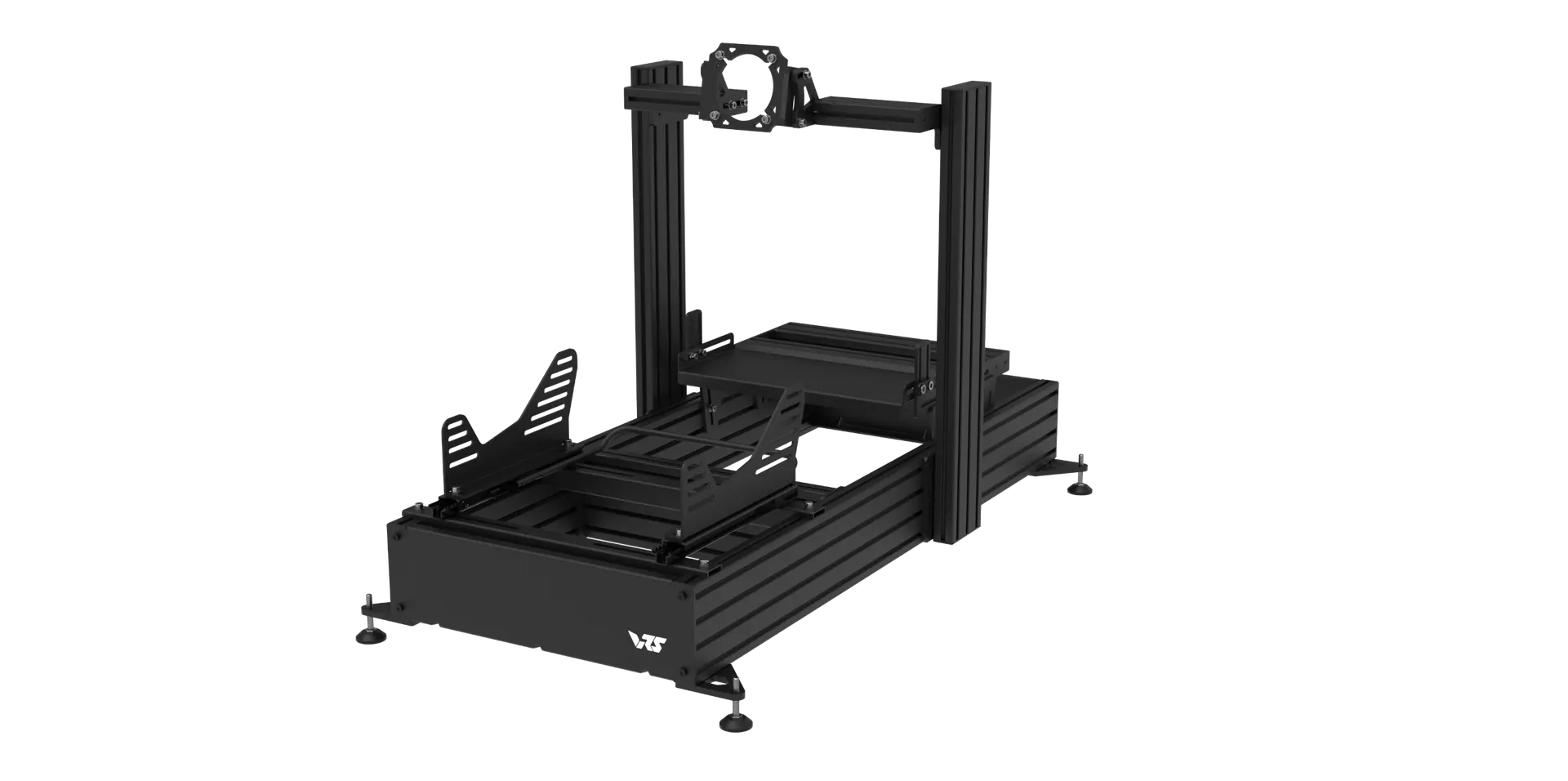
Universal wheel & pedal mounting
A universal front wheel mount fits any modern direct drive base with a rock-solid connection.
The fully adjustable pedal tray with heel support fits any pedals on the market, from load-cell to hydraulic sets.
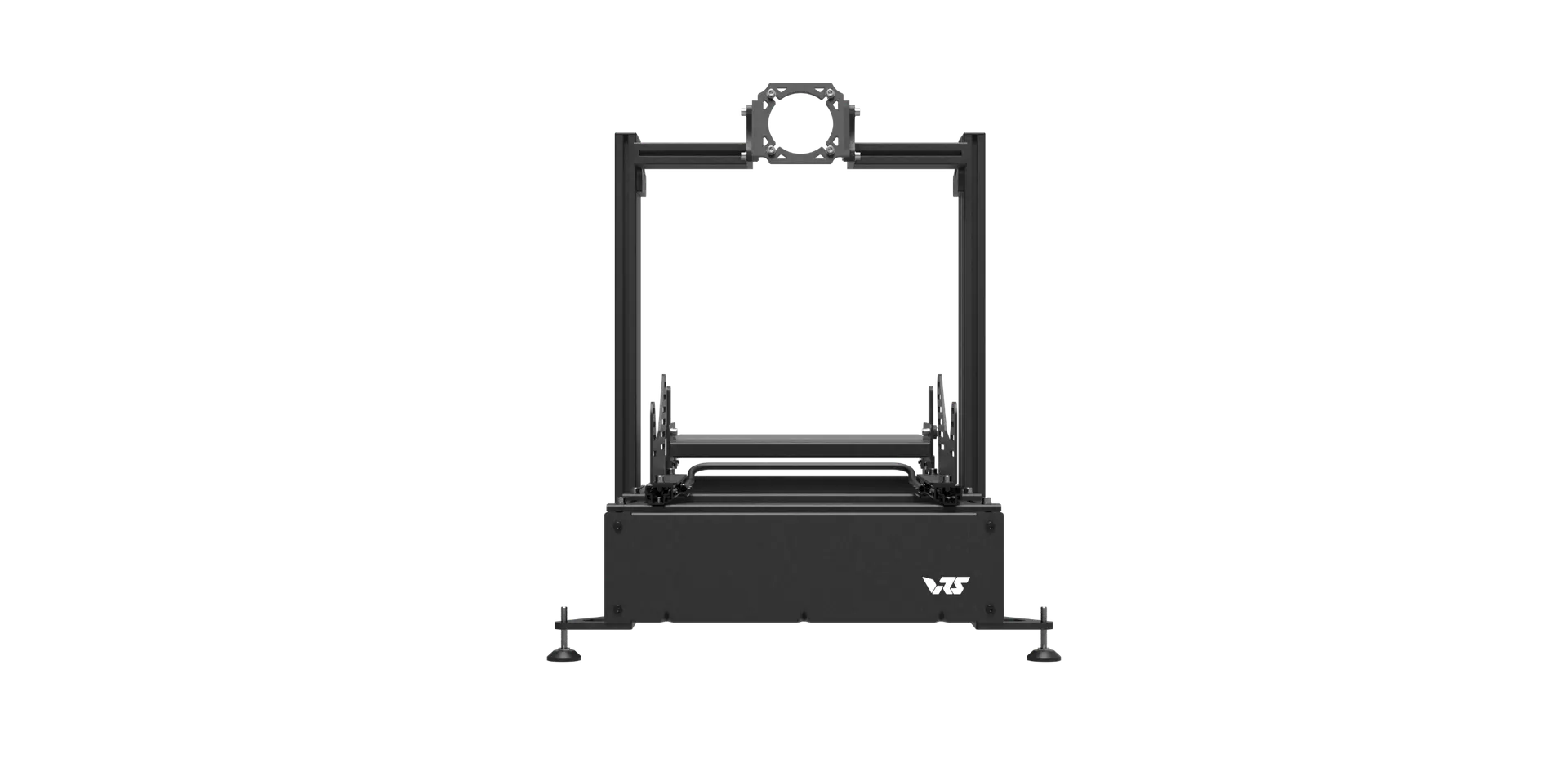
Rally & GT seating
A modular frame supports Rally and GT seating positions, with seat sliders and brackets included.
Side mounts adjust from 0 to 18 degrees of tilt, bottom mounts from 0 to 6 degrees. Recommended for users from 120cm to 230cm.

The matching GT-2 Seat.
Purpose-built for long stints in the GT-2 cockpit.
GT-2 Racing Seat
The VRS DirectForce GT-2 Seat is the matching racing seat for the GT-2 cockpit, delivering a supportive, race-proven seating position for long sessions.
It mounts to the GT-2 chassis on the included seat sliders, with Rally and GT positioning supported by the cockpit frame. Designed and manufactured in the EU.

Cockpit and seat, together
Mounted on the included seat sliders, the seat drops straight onto the GT-2 chassis for a race-ready position out of the box.

Make it yours.
The GT-2 Cockpit is available in seven colours.
Seven colourways
From subtle to standout, pick the finish that matches your battlestation.

Black, White, Blue, Green, Orange, Red and Turquoise.

Available in seven colours
Made in the EU, ready in minutes
Designed and manufactured 100% in the EU. Ships 95% pre-assembled in a single box for a quick 5 to 10 minute setup.
All tools and screws for wheel and pedal mounting are included in the box.

3-year warranty

Money-back guarantee

Market-leading customer support

Built in the EU
Why Choose the VRS GT-2?
Seat sliders and brackets are included as standard. The competition charges upwards of €70 for the same parts.
VRS GT-2Typical competitor
Seat slidersIncluded in the priceCommonly sold separately
Seat bracketsIncluded in the priceCommonly sold separately
Front or bottom wheelbase mountUniversal, included (upon choice)Sometimes an extra
Aluminum profile160 x 40 mm, 3.5 mm wallOften lighter thin-wall
Direct drive supportUp to 45 NmOften rated lower
Made inEuropean UnionOften imported
Colour options7 coloursOften black only
Assembly95% pre-assembledOften flat-pack
Raced by prosYesRarely
What makes an aluminum sim racing cockpit different
Most sim racing rigs are built from folded steel tube or a moulded plastic shell. An aluminum sim racing cockpit is a different thing entirely: it is assembled from extruded aluminum profile, the same T-slot material used for machine frames and factory jigs. Every bracket bolts into a slot rather than a drilled hole, so the frame is adjustable along its whole length and stays rigid in the directions that matter.
The DirectForce GT-2 is built from 40 x 160 mm profile with a 3.5 mm wall, in 6063-T6 aluminum. That is the heaviest section in common use in sim racing, and it is what lets an aluminum cockpit sit still under a 45 Nm direct drive wheel base. Lighter 40 x 40 and 40 x 80 frames twist under peak torque, and that twist reaches you as a soft, late force feedback signal. A stiffer frame does not add force. It stops the frame taking force away from you.
What 8020, T-slot and profile size actually mean
You will see aluminum profile rigs called 8020 rigs. 8020 is a US manufacturer of extruded aluminum profile whose name became the generic term, in the same way people say Hoover for a vacuum. T-slot describes the channel running down each face of the profile: a bolt head drops into the channel and clamps anywhere along it. That is the whole reason an aluminum sim racing cockpit is adjustable at all.
Profile size is quoted in millimetres of cross section. 40 x 40 is entry level. 40 x 80 is the common mid-range. 40 x 160 is what the GT-2 uses for its main rails. Doubling the depth of a beam raises its stiffness in bending by roughly eight times, which is why section size matters far more than the total weight of metal in the rig.
How much torque can the frame handle?
Match the frame to the wheel base you will own in two years, not the one on your desk today. A 5 to 8 Nm belt base asks very little of a chassis. A 15 Nm direct drive base is where thin profile starts to complain. Above 20 Nm the frame becomes the limiting part of the whole setup. The GT-2 is rated to 45 Nm, which covers every direct drive wheel base currently on the market, so the chassis will outlast several generations of wheel base.
The same logic applies to pedals. A load cell or hydraulic brake pedal can see over 100 kg of driver input on every braking zone. The GT-2 carries its pedal deck on the same 40 x 160 profile as the wheel deck, with 10 mm laser cut carbon steel mounting plates, so hard braking causes no flex to the chassis and does not walk the pedals forward over a stint.
DirectForce GT-2 full specifications
Frame and materials
- Aluminum extrusion: 6063-T6, 6000 series
- Profile dimensions: 40 mm x 160 mm
- Wall thickness: 3.5 mm
- Sheet metal: laser cut carbon steel, 10 mm thick
- Finish: matte fine structural powder coating, made in the EU
Dimensions and weight
- Footprint: 1,360 mm long x 580 mm wide
- Package dimensions: 140 cm x 80 cm x 40 cm
- Weight: 60 kg
- Recommended driver height: 120 cm to 230 cm
Compatibility
- Direct drive wheel bases up to 45 Nm
- Universal wheel mount with front and bottom mounting configurations
- Independent pedal angle, height and reach adjustment
- Modular frame allowing left and right accessory mounting
- Rally and GT seating positions
- Seat tilt: 0 to 18 degrees on side mounts, 0 to 6 degrees on bottom mounts
What is included
- Seat brackets
- Seat sliders
- All screws for wheel base attachment
- All screws for pedal mounting
Colours, origin and warranty
- Seven colours: black, white, blue, green, orange, red and turquoise
- Designed and manufactured 100% in the EU
- Three year warranty on all VRS manufactured components
Aluminum sim racing cockpit
questions, answered.
questions, answered.
Buy now
Where is the GT-2 cockpit made?
The GT-2 is designed and manufactured 100% in the EU, including the powder coating, and carries a three year warranty on all VRS manufactured components.
It is available in seven colours: black, white, blue, green, orange, red and turquoise.
How much room does the GT-2 need?
The footprint is 1,360 mm long by 580 mm wide, and it suits drivers from roughly 120 cm to 230 cm tall. It ships in a 140 x 80 x 40 cm package and weighs 60 kg assembled.
The frame supports both a reclined GT seating position and a more upright rally position, so the same chassis works for GT, formula and rally driving.
How long does the GT-2 take to assemble?
Most drivers have the frame together in around an hour with the supplied hardware. All screws for wheel base attachment and pedal mounting are in the box.
Because every joint rides in a T-slot, changing your driving position afterwards takes minutes rather than a rebuild.
Does the GT-2 cockpit come with a seat?
The cockpit is sold as a chassis. Seat brackets and seat sliders are included as standard, so it accepts most GT and rally bucket seats without extra parts. Many competitors charge separately for those brackets.
The matching VRS GT-2 racing seat can be added to the same order if you want a complete rig from one supplier.
How much wheel base torque can the GT-2 handle?
Up to 45 Nm, which covers every direct drive wheel base currently on the market, including the VRS DirectForce Pro range.
Buy the frame for the wheel base you will own in two years rather than the one you have now. A chassis outlasts several generations of wheel base, and frame flex is felt as soft, delayed force feedback that no amount of wheel base power can fix.
What size aluminum profile does the GT-2 use?
The GT-2 main rails are 40 x 160 mm 6063-T6 profile with a 3.5 mm wall, joined with 10 mm laser cut carbon steel plates. 40 x 160 is the heaviest section in common use in sim racing.
Section depth matters more than total mass. Doubling the depth of a beam raises its stiffness in bending by roughly eight times, so a 40 x 160 frame resists twist far better than a 40 x 80 frame of similar weight.
What is an aluminum sim racing cockpit?
An aluminum sim racing cockpit is a rig built from extruded aluminum profile rather than folded steel tube or moulded plastic. The profile carries a T-slot channel down each face, so the wheel deck, pedal deck, seat and accessories clamp anywhere along the frame instead of bolting to fixed holes.
The result is a chassis that is both stiffer under direct drive torque and fully adjustable. These rigs are also called 8020 rigs, after the US profile manufacturer whose name became the generic term.